A website for freelancers who close clients, not just gigs
Platform freelancers compete on price; independent freelancers compete on trust. One page that names your specialty, shows your services, and takes project inquiries directly is how you graduate from marketplace bids to clients who found you and came to you.
Build free · No code · Live at yourname.amty.page from $9/mo
Why freelancers lose work without a website
Marketplaces own your reputation
Your Upwork reviews, ranking, and client list live on someone else's platform, behind their fees and their algorithm. One page you own is a reputation that can't be suspended, undercut, or forced into a bidding war.
A link-in-bio page isn't a business
A stack of buttons tells a prospect nothing about what you charge for or how you work. A real page — services, positioning, an inquiry form — reads like a business, and businesses get quoted budgets, not hourly-rate haggling.
"What do you actually do?" costs you referrals
Your friends want to send you work but can't explain your offer. A page that says it in one sentence — "copywriting for SaaS launches", "bookkeeping cleanup for e-commerce" — turns everyone who knows you into a working referral channel.
Themes that fit freelancers
Each theme is a live site you can open right now — same layout, your content instead of the example's.
 Open live demo
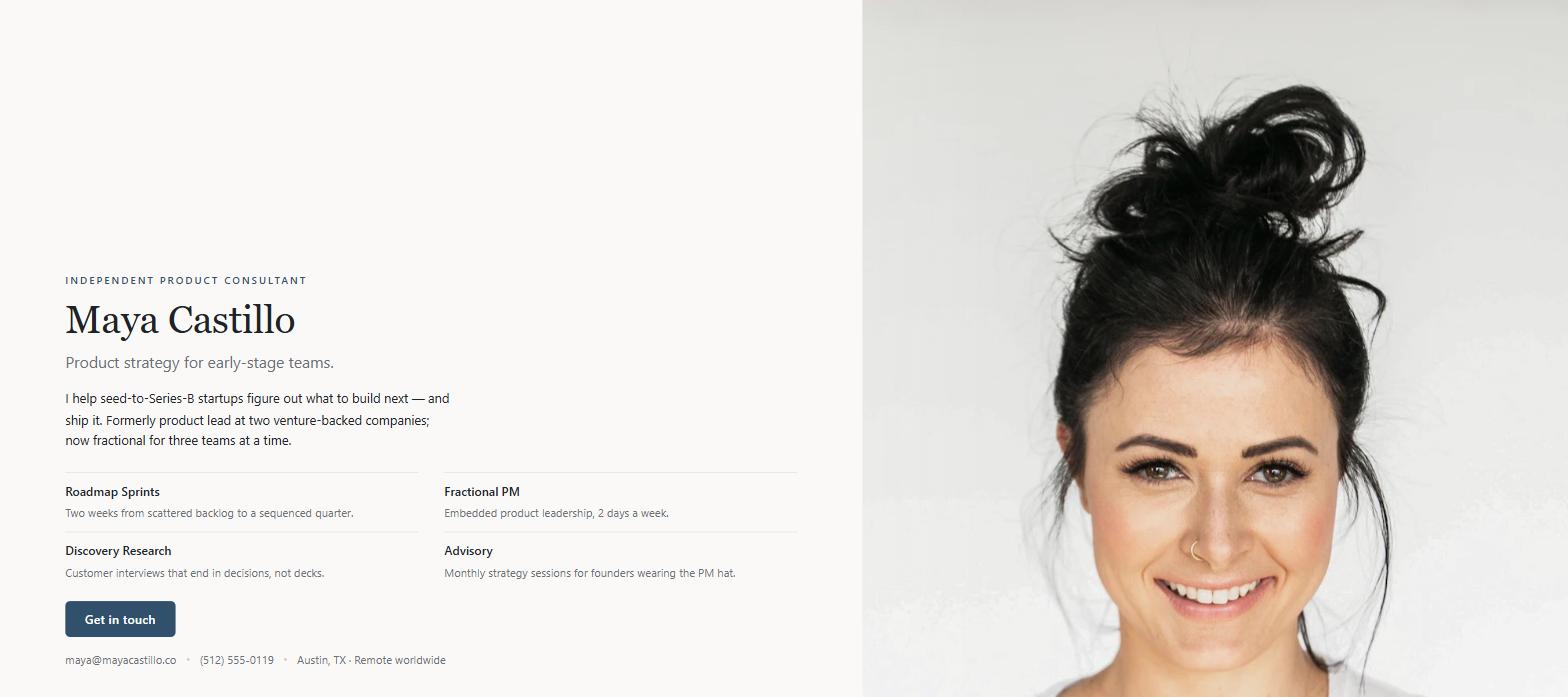
Profile Split
Independent professionals
A single full-height screen: your details on the left, your photo on the right.
 Open live demo
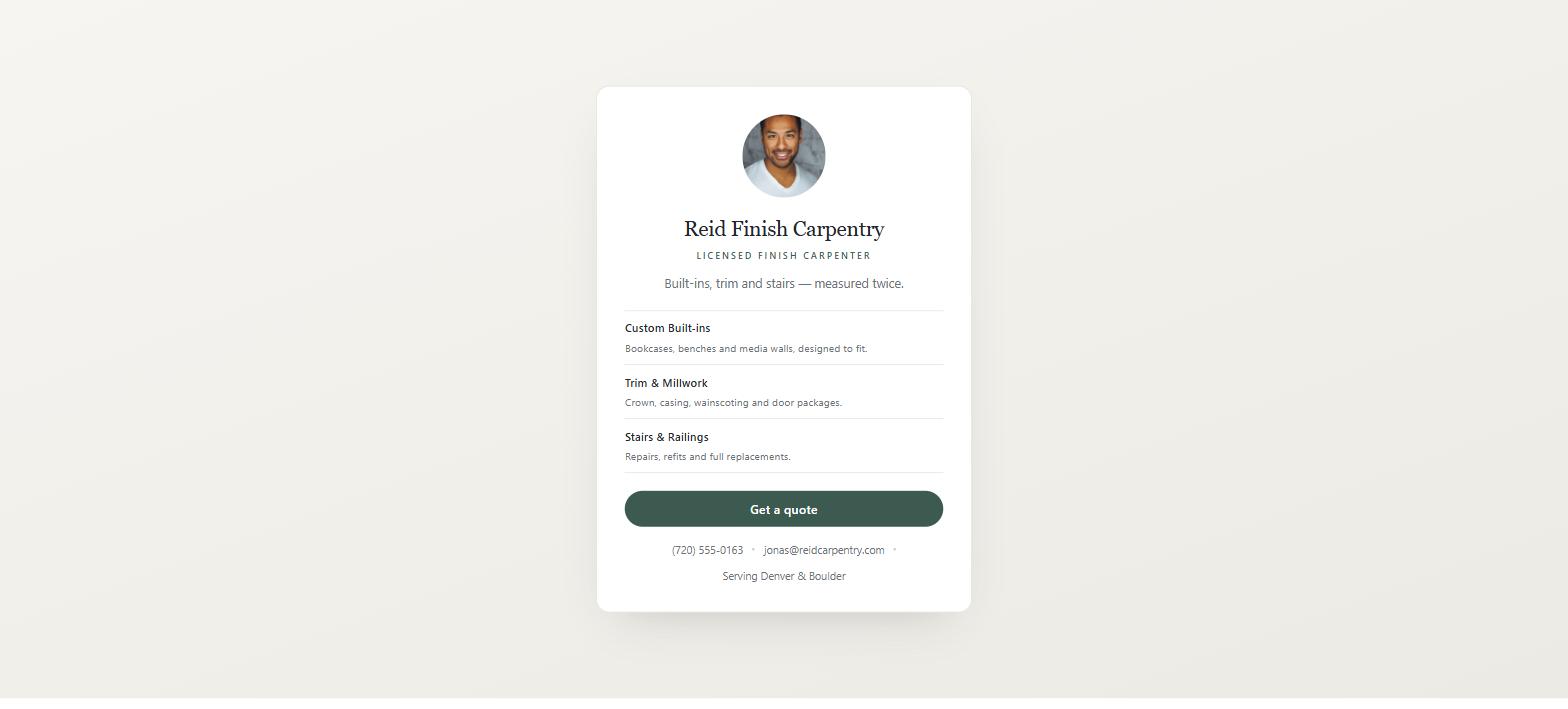
Calling Card
Freelancers & solo practitioners
A single centered card with your photo, services and contact details.
What your site could say
Nadia Osei
Freelance copywriter for B2B software companies. Launch pages, email sequences, and product messaging that sounds like a human wrote it — because one did. Six years in-house at two SaaS startups before going independent. Send a project brief online.
Live in three steps
Pick Profile Split or Calling Card
Profile Split leads with your face and your pitch — right for personal-brand freelancing. Calling Card is a crisp, compact page when the work should speak first.
Nail the one-sentence positioning
The form starts with what you do and for whom. Get that sentence right and the rest of the page — services, story, form — falls into place.
Deploy and go direct
Live at yourname.amty.page in one click. Put it in proposals, invoices, and your email signature — every touchpoint now sells the next project.
Questions freelancers ask
Do freelancers need a website if they're on Upwork or Fiverr?
The platforms are fine for filling gaps; they're a ceiling for building a business. Direct clients pay more, negotiate less, and return — and they need somewhere to find and vet you. One page with your specialty and an inquiry form is the minimum infrastructure for going direct.
How much does a freelancer website cost?
Building your page on Amty is free — you pay only to publish. A plan is $9/month or $99/year and puts it live at yourname.amty.page with the inquiry inbox, instant email alerts, and a custom domain. It's deliberately priced for people whose income arrives in invoices.
What should a freelancer's website include?
A one-sentence positioning line naming your craft and your niche, three or four services framed as outcomes, a short story of why you're credible (past roles count), and a project inquiry form that asks about scope and timing. Skip the life story — clients scan for fit, then reach out.
How fast can I be live?
In one sitting. The theme's form asks for your positioning, services, and background — if you've written a proposal or a LinkedIn summary, you have the material. Fill it in, deploy, and the page is live at your own address before you close the laptop.
Can I move it to my own domain later?
Yes. Publish at yourname.amty.page, then connect a domain you own — both are part of your plan. Everything — form, alerts, content — stays put; only the address on the tin changes.
Tonight, someone will Google your name.
Decide what they find. Your site can be live at yourname.amty.page in the next half hour.